The Changing Landscape of the Mattress Industry
In earlier days, customers would visit local stores, test a mattress, and make a purchase based on feel and price. But today, the buying journey has changed.
- Customers research online
- They compare brands, not just products
- They read reviews and trust perception
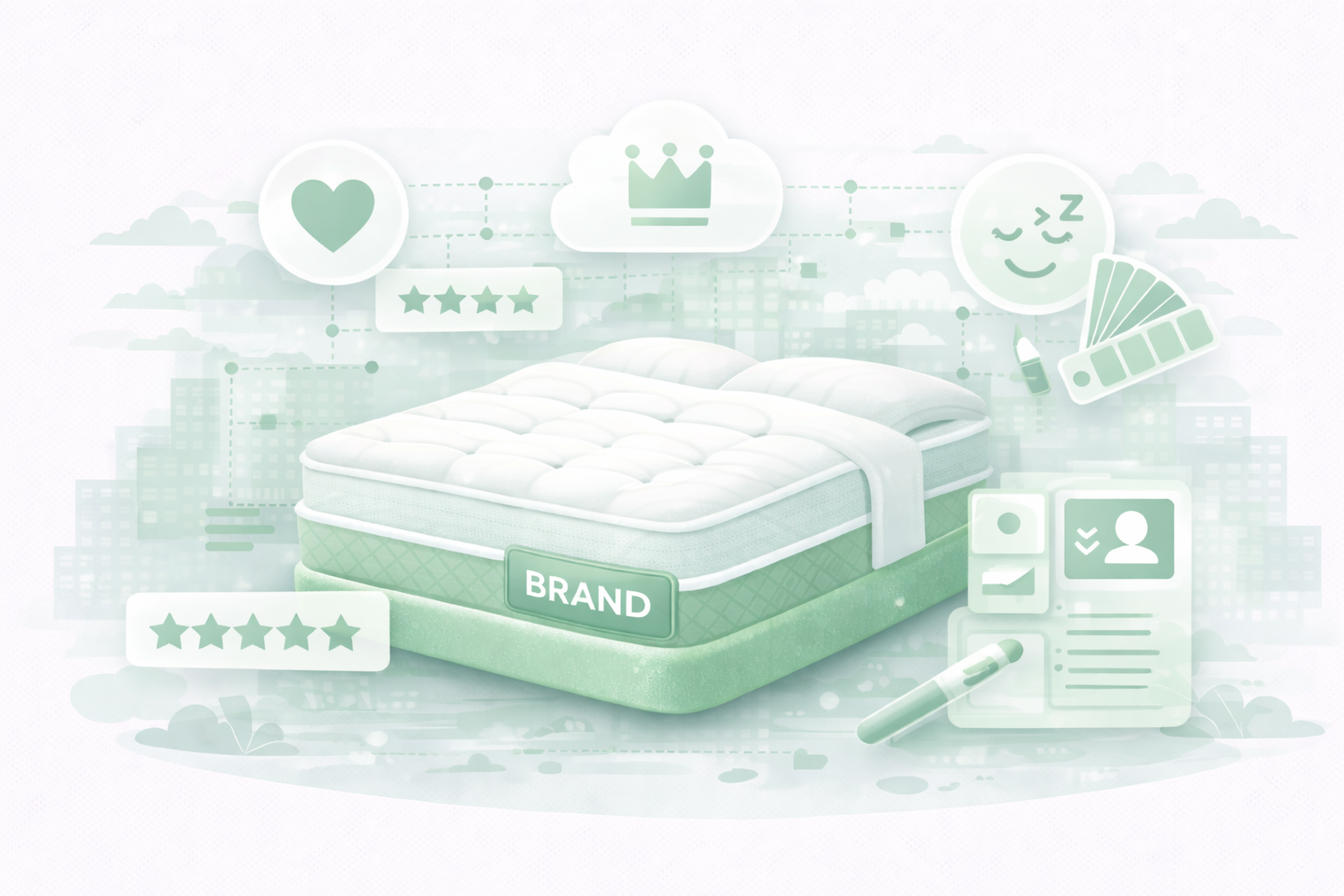
This means your mattress is no longer competing only on quality—it is competing on brand identity.
From Product to Experience: The Role of Branding
A mattress is not just foam, springs, or fabric. It is an experience.
Strong brands understand this and communicate:
- Comfort
- Trust
- Durability
- Lifestyle
For example, instead of saying “high-density foam mattress”, a strong brand says:
“Designed for deep, uninterrupted sleep”
That’s the difference between product selling and brand storytelling.
Why Branding Matters More in the Mattress Industry
1. High Competition, Similar Products
Most mattress brands offer similar features:
- Memory foam
- Orthopedic support
- Cooling technology
Without branding, your product becomes a commodity.
2. Trust is Everything
Customers cannot fully test a mattress online. They rely on:
- Brand reputation
- Visual identity
- Customer reviews
A strong brand reduces hesitation and increases conversion.
3. Higher Perceived Value
Two similar mattresses can have very different prices.
Why?
Branding creates perceived value
A well-branded mattress can sell at a premium because it feels more reliable and high-quality.
Key Elements of a Strong Mattress Brand
1. Visual Identity
Your logo, colors, and packaging should reflect:
Soft tones, clean typography, and minimal design often work best in this industry.
2. Brand Messaging
Your messaging should focus on:
- Sleep quality
- Health benefits
- Lifestyle improvement
Avoid technical jargon. Speak in benefits, not features.
3. Consistency Across Platforms
From website to social media to packaging—everything should feel consistent.
Consistency builds recognition. Recognition builds trust.
4. Customer Experience
Branding is not just visual—it’s experiential.
- Easy website navigation
- Clear product descriptions
- Smooth buying process
Every interaction shapes your brand.
Branding Mistakes Mattress Companies Make
Selling Features Instead of Benefits
Customers don’t care about foam density—they care about better sleep.
Ignoring Design
Poor design creates a perception of low quality, even if the product is good.
No Clear Positioning
If your brand is “for everyone,” it connects with no one.
Inconsistent Branding
Different colors, fonts, or messaging across platforms confuse customers.
How Branding Influences Buying Decisions
When a customer visits your website, they subconsciously ask:
- Can I trust this brand?
- Does this feel premium?
- Is this worth the price?
Branding answers these questions instantly.
A strong brand:
- Reduces decision time
- Builds confidence
- Increases conversions
The Power of Emotional Connection
Sleep is deeply personal. It affects:
Brands that connect emotionally win.
Instead of selling a mattress, sell:
- Better mornings
- Pain-free sleep
- Peaceful nights
This emotional positioning creates long-term brand loyalty.
Building a Memorable Mattress Brand
To stand out in a crowded market, mattress brands must:
- Focus on storytelling
- Invest in design
- Create a unique identity
- Build trust through consistency
Branding is not a one-time activity—it is a long-term investment.
The Future of Mattress Branding
The future belongs to brands that:
- Combine product quality with strong identity
- Focus on digital-first experiences
- Build trust through transparency
As competition increases, branding will become the key differentiator.
Final Thoughts
In today’s competitive market, a good mattress is not enough.
To truly grow, manufacturers need to build a brand that represents comfort, trust, and identity.
Because in the end, customers don’t just remember products—they remember brands.




.svg)


